
1. The “Heart” of the Light: Source Type & Wattage
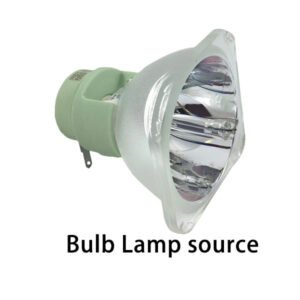
Currently, there are three main types on the market: Bulb Lamp light source ; Led light source ; Laser light source.
Bulb Lamp light source (Traditional Bulbs):
-
Features: Strong UV output, incredible beam piercing power, and sharp edges. It remains the top choice for large stages and long-distance outdoor projections.
-
Common Wattages: 230W (The classic model, perfect for small-to-medium banquet halls), 380W / 450W / 480W (The mainstream standard, offering high brightness and long throw distance).
-
Note: Bulbs are consumables with a lifespan typically around 1,500 to 2,000 hours and require regular replacement.
LED / Laser Light Sources:
-
-
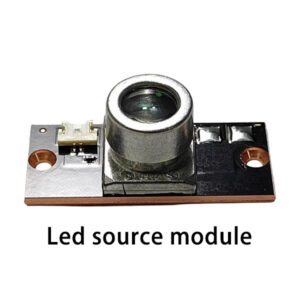
Features: Extremely long lifespan (up to 20,000+ hours), low power consumption, and high color saturation. In recent years, laser beam lights have dominated outdoor landmarks and electronic music festivals due to their “ultra-thin, ultra-bright, ultra-distant” characteristics.
-
Buyer’s Tip: If you are looking for the ultimate cost-effectiveness and proven stage effects, a 380W – 480W traditional discharge bulb beam light is the current gold standard. However, for high-frequency or hard-to-maintain venues (like fixed installations in clubs), prioritize LED or Laser sources.
-
2. The Optical System: Beam Quality & Precision
A great beam light shouldn’t just be “bright”—it needs to hold its shape over a distance.
-
Beam Angle: Beam lights have a very narrow beam angle, usually between 0° and 4°. The smaller the angle, the more condensed the beam, making the light pillar look like a solid, razor-sharp rod in the air.
-
Front Lens Diameter: This refers to the diameter of the large lens at the head of the fixture. A large aperture (such as 150mm, 160mm, or wider) produces a thicker, more robust beam, exponentially increasing the visual impact.
-
Uniformity & Crispness: High-quality beam lights use high-precision anti-reflective coated glass optics. When testing, project the light onto a flat wall: a superior fixture will show consistent brightness from the center to the edge, with a clean border free of stray light or rainbow artifacts (chromatic aberration).
3. Effects & Functionality: Gobos, Colors, and Prisms
The dazzling mid-air graphics created by beam lights rely entirely on the combination of internal components:
-
Color Wheel: Check for smooth color transitions. High-end fixtures not only offer pure colors but also support “half-color effects” (splitting a single beam into two colors).
-
Gobo Wheel: A good beam light comes with diverse dynamic gobos and supports a “gobo shake” effect to simulate water ripples, flames, or starry skies.
-
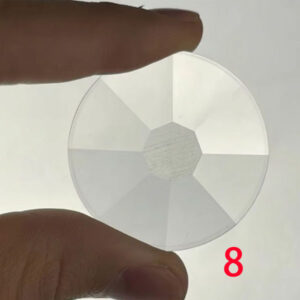
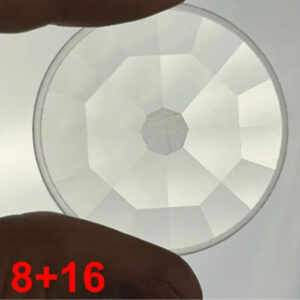
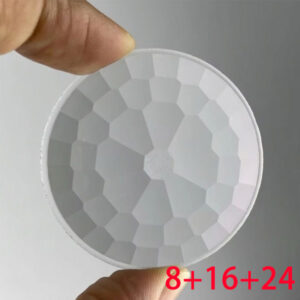
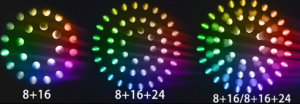
Prism System: This is the key to turning a single beam into a “sky full of stars.” When purchasing, look for:
-
Dual Prisms or multi-prism combinations (e.g., an 8-facet prism + 16-facet prism).
-
Whether the prisms support bi-directional rotation and prism overlaying. Overlaying prisms adds incredible depth and layers to your lighting design.
-
4. Hardware Craftsmanship: Stability & Speed
Stage lights must rotate frequently and at high speeds during a show. The hardware craftsmanship determines whether the fixture will fail during a live performance.
-
Motors & Movement Speed: The Pan (horizontal) and Tilt (vertical) movements must be fast and incredibly precise. Top-tier brands use 3-phase stepping motors, which are not only fast but also whisper-quiet, stopping instantly with zero shaking or drift.
-
Cooling System: Beam lights generate massive amounts of heat. Reputable manufacturers utilize integrated aluminum cooling structures paired with intelligent temperature-controlled fans. Poor heat dissipation shortens bulb life drastically or triggers thermal shutdown mid-show.
-
Housing & IP Rating:
-
For indoor stages/bars, standard dust-proof housing is sufficient.
-
For outdoor tourism, music festivals, and light shows, you must choose fixtures with an IP65 or higher weatherproof rating, otherwise a single rainstorm can ruin the equipment.
-
5. Industry Trend: Traditional Discharge Bulb vs. Laser Light Source
Laser beam lights have disrupted the market, competing directly with 380W/480W discharge lamps in outdoor tourism and massive festivals. Here is how they stack up side-by-side:
Deep Dive Comparison
-
Beam Texture: Traditional bulbs project a slightly divergent light path that gets wider and fainter over long distances. Laser sources possess native collimation (almost zero divergence), making the beam look like an unbroken, solid “light crystal” even miles away.
-
Lifespan & Fade: Traditional bulbs last 1,500–2,000 hours and dim or shift in color over time. Lasers last 20,000+ hours with almost zero degradation in brightness or color purity, slashing maintenance costs.
-
Safety & Restrictions: Lasers focus massive energy into a tight space. High-power laser beams can cause burns or fires if left static on flammable surfaces. Therefore, laser beam lights are not suitable for low ceilings or close-proximity indoor audiences; they belong high up, shooting into the night sky.
Summary: Scenario-Based Selection Guide
| Application | Recommended Configuration | Core Focus |
| Weddings / Banquet Halls / Hotels | 230W – 380W Discharge Bulb | Compact size, quiet operation, high ROI |
| Bars / Livehouses / EDM Clubs | 380W – 480W 3-in-1 (Hybrid) or LED | Fast pan/tilt, rich prisms, long lifespan |
| Large Concerts / Outdoor Light Shows | 480W+ Discharge Bulb OR Laser Beam | Massive front lens, maximum piercing power, IP65 Waterproof |